The Veteran Bottleneck: How Tools Built for Beginners Are Slowing Down Your Best People

There is a prevailing assumption embedded in modern software design: that simplicity is a universal virtue. Reduce friction. Flatten the learning curve. Guide the user toward the intended path with as few decision points as possible. These principles have shaped an entire generation of enterprise workflow platforms, SaaS automation tools, and data-driven process systems. And for a significant portion of the workforce, they work reasonably well.
But for another segment — the experienced analysts, the senior operations managers, the domain specialists with fifteen years of institutional knowledge — these same design choices function less like assistance and more like obstruction.
The Hidden Cost of Designing for the Middle
When software teams build for the median user, they are making a calculated trade-off. Onboarding becomes faster. Support tickets decrease. Adoption metrics improve. These are legitimate organizational wins, and the business case for prioritizing them is not difficult to construct.
The problem emerges at the edges of the user population — specifically at the upper edge, where deep expertise lives. A workflow platform designed to prevent a new hire from making a common mistake will often prevent a veteran from making a deliberate exception. A data automation system built to enforce standardized data entry protects against error for most users while simultaneously blocking the senior analyst who knows that a particular data source requires a non-standard treatment to produce an accurate output.
The tool cannot distinguish between a mistake and an informed deviation. It treats both the same way: as something to be prevented.
When Rules Become Ceilings
Consider a scenario familiar to many enterprise environments. A workflow platform has been configured to route all flagged transactions through a three-step review process. For the majority of cases, this is appropriate and efficient. But an experienced compliance officer — one who has handled thousands of similar cases — can identify within seconds that a particular flag is a known false positive generated by a specific data condition. She knows this because she has seen it dozens of times and has developed a reliable heuristic for identifying it.
Under the platform's logic, she must still complete all three review steps. The system offers no mechanism for an experienced user to document her judgment and move on. The tool does not recognize her expertise as a variable worth accommodating. Her time — arguably the most valuable resource she brings to the organization — is consumed by a process designed to protect against the errors of someone far less experienced.
Multiply this scenario across an organization's senior staff, and the cumulative drag on productivity becomes substantial. More damaging still, it is largely invisible. The hours lost to mandatory process compliance rarely appear in any dashboard. They are absorbed into the normal rhythm of work, indistinguishable from productive activity.
The Paradox of Guided Automation
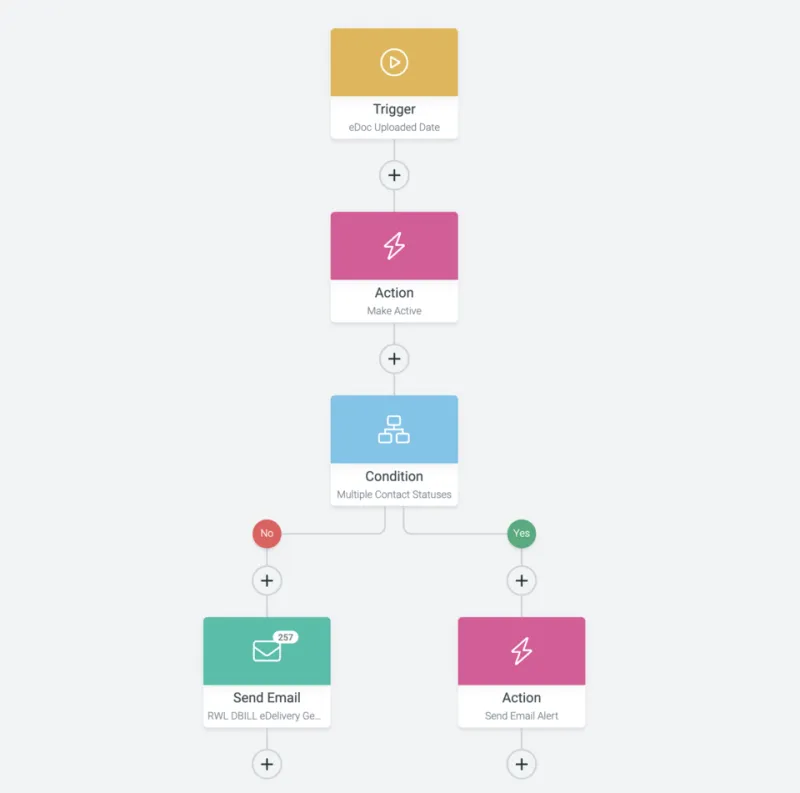
Automation tools compound this dynamic in a particular way. When a process is automated, it is typically optimized for the most common case. The logic is clean, the path is linear, and the system moves quickly. For straightforward inputs, this is genuinely valuable.
But experienced professionals are often most useful precisely when inputs are not straightforward. Their value to the organization is concentrated in the moments when standard logic breaks down — when a client situation requires contextual interpretation, when a dataset contains an anomaly that changes the appropriate analytical approach, when a process exception is not an error but a necessity.
In these moments, automation systems frequently become obstacles rather than accelerators. The experienced user must either force their situation into a template it does not fit, triggering downstream inaccuracies, or spend significant time navigating exception workflows that were clearly designed as afterthoughts. Neither outcome reflects the organization's best use of that employee's capabilities.
Rigidity Disguised as Efficiency
One of the more insidious aspects of this problem is how it presents itself. Rigid, novice-optimized workflows often appear highly efficient in aggregate reporting. Process completion rates are high. Cycle times look consistent. Compliance metrics are clean. The system appears to be functioning exactly as intended.
What the reporting does not capture is the quality of judgment being suppressed, the workarounds being quietly developed by experienced staff, or the organizational knowledge that is being systematically underutilized. Veterans learn to route around the constraints — maintaining parallel tracking in spreadsheets, using informal communication channels to flag the nuances the platform cannot accommodate, or simply accepting a slower pace as the cost of operating within the system.
These adaptations are rational responses to genuine friction. They are also signs of a tool that has stopped serving its most knowledgeable users.
Rethinking Who Software Is Actually For
The conversation around user-centered design in enterprise software has matured considerably over the past decade, but it has not yet fully grappled with the expertise variable. Most user research frameworks focus on reducing barriers to adoption and minimizing errors for less experienced users. These are worthwhile goals. They are not, however, the complete picture.
A more sophisticated approach would recognize that expertise is not a uniform state. Users exist along a spectrum of domain knowledge, and the optimal tool configuration for a new hire is frequently the wrong configuration for a ten-year veteran. Software that cannot adapt to this reality is not neutral — it is actively penalizing the employees whose judgment is hardest to replace.
Some platforms are beginning to address this through tiered permission structures, configurable workflow paths, and role-based process flexibility. These are meaningful steps. But they require deliberate implementation on the organizational side, and many enterprises have not yet made the investment to configure their platforms in ways that genuinely serve advanced users.
The Organizational Reckoning
For business leaders evaluating workflow and automation platforms, the expertise question deserves explicit consideration during the procurement and implementation process. It is not sufficient to ask whether a tool is easy to use. The more complete question is: easy for whom, and at what cost to everyone else?
The employees with the deepest institutional knowledge are often the most expensive to hire, the most difficult to replace, and the most critical to organizational resilience. Deploying them inside systems that cap their effectiveness is not a neutral operational choice. It is a structural tax on the organization's most valuable human capital.
Smarter workflows should accelerate everyone — not by flattening expertise into compliance, but by creating the conditions in which judgment, experience, and contextual knowledge can operate at full speed.