Automation at Full Speed, Oversight at Zero: The Hidden Cost of Unchecked Workflow Logic
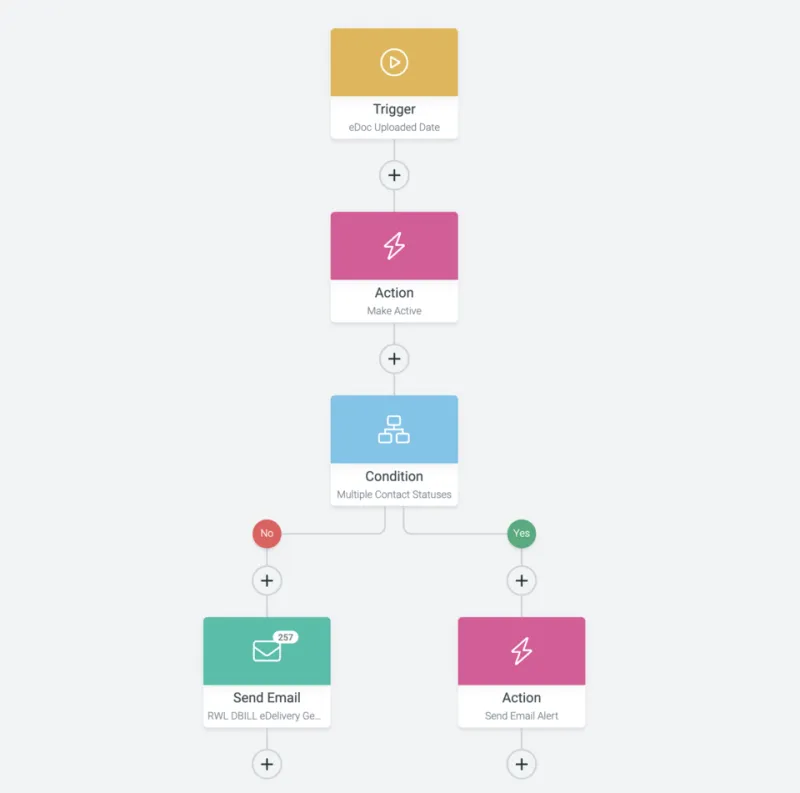
Photo: PathwayPort, CC0, via Wikimedia Commons
There is a particular kind of organizational confidence that emerges after a successful automation rollout. Processes that once required hours of manual coordination now complete in minutes. Approval chains that consumed entire afternoons resolve themselves overnight. The efficiency gains are real, measurable, and deeply satisfying to anyone who has watched capable employees spend their days on repetitive, low-value tasks.
But confidence, in the context of automation, carries a specific risk that rarely surfaces in implementation planning: the faster a flawed process runs, the more damage it produces before anyone notices something is wrong.
This is the validation vacuum — the structural gap between what an automated workflow was designed to do and what it is actually doing at scale, in real conditions, with real data.
Speed Is Not the Same as Correctness
When organizations build automated workflows, the primary objective is almost always throughput. How many steps can be removed? How many decisions can be delegated to logic rather than labor? These are legitimate questions, and the answers frequently deliver genuine value.
The problem arises when the optimization for speed becomes so dominant that validation is treated as friction rather than function. Checkpoints get removed because they slow things down. Review stages get bypassed because they require human availability. Exception-handling logic gets simplified because edge cases seem unlikely.
Each of these decisions is individually defensible. Collectively, they produce a workflow that moves quickly in the right direction under ideal conditions — and moves just as quickly in the wrong direction the moment conditions change.
Consider a common scenario in mid-sized B2B operations: an automated order fulfillment workflow that pulls pricing data from an integrated product catalog. When a pricing error is introduced upstream — a decimal point misplaced during a bulk import, for instance — the automation does exactly what it was designed to do. It reads the data, processes the orders, generates the invoices, and notifies the customers. By the time a human reviews anything, hundreds of transactions may have been completed at the wrong price point. The automation didn't fail. The absence of validation did.
Where Cascading Failures Actually Begin
The term "cascading failure" suggests a dramatic, visible collapse. In practice, automation-driven errors tend to propagate quietly, embedding themselves across systems before the first symptom becomes apparent.
In one documented case from a regional logistics operation, an automated routing algorithm was updated to incorporate real-time traffic data from a third-party API. The integration worked correctly during testing. In production, however, a subtle data-formatting inconsistency caused the algorithm to misinterpret certain distance values. Routes were being calculated as shorter than they actually were, which affected delivery scheduling, driver compensation calculations, and customer promise windows simultaneously. The workflow touched four separate systems. None of them flagged an anomaly because, individually, each was receiving and processing inputs within acceptable parameters. The error only became visible when customer complaint volume spiked two weeks later.
This is the architectural reality of modern automation: systems that are tightly integrated and highly efficient are also systems where a single corrupted input can travel furthest before being caught.
The Structural Case for Validation Gates
A validation gate is not a bureaucratic checkpoint. It is a deliberate architectural feature that asks a specific question at a specific point in a workflow: is what we are about to do consistent with what we intended?
Effective validation gates share several characteristics. They are positioned at consequential junctions — moments in a workflow where the output will either constrain or amplify every subsequent step. They are designed around known failure modes rather than hypothetical ones. And they distinguish between anomalies that require a full stop and anomalies that require a flag.
Not every validation gate needs to involve a human being. Rule-based checks, threshold comparisons, and cross-system reconciliation logic can all serve as automated validation mechanisms. The key distinction is intentionality: these checks exist specifically to verify correctness, not to advance the workflow.
The workflows most at risk are those where validation was never explicitly designed in — where the assumption was that if the inputs are correct and the logic is sound, the outputs will be acceptable. That assumption holds until it doesn't, and the cost of the exception is proportional to how long the workflow ran unchecked.
Identifying Where Human Judgment Still Belongs
One of the more useful exercises an operations team can undertake is a deliberate audit of existing automated workflows with a single guiding question: at what point in this process would a competent human employee recognize that something was wrong?
That point of recognition — that moment of contextual judgment — is almost always the location where a validation gate should exist. Humans are not better than automation at processing volume or maintaining consistency. They are, however, significantly better at recognizing when a result doesn't make sense given everything else they know about the situation.
A purchasing manager reviewing an invoice for $47,000 on an order that was quoted at $4,700 catches the error immediately. An automated accounts payable workflow with no anomaly detection does not. The question is not whether to use automation in accounts payable — the efficiency case is sound. The question is whether the automation includes a mechanism that asks what a thoughtful human would ask when looking at that invoice.
Practically, this means mapping each automated workflow against two criteria: the volume of transactions it processes and the downstream consequence of a single erroneous transaction. High-volume, high-consequence workflows require the most rigorous validation architecture. Low-volume, low-consequence workflows can tolerate lighter oversight. The matrix is simple; the discipline to apply it consistently is not.
Building Automation That Earns Its Confidence
The goal is not to slow automation down. The goal is to ensure that the confidence organizations place in their automated systems is structurally earned rather than optimistically assumed.
This requires treating validation as a design requirement from the beginning of any automation initiative, not as an afterthought appended when something goes wrong. It requires establishing monitoring protocols that surface anomalies in near-real-time rather than waiting for downstream symptoms. And it requires a cultural willingness to accept that some workflows will run slightly slower because they include verification steps — and that this is a feature, not a deficiency.
Organizations that build this discipline into their automation practice will find that their systems become more trustworthy over time, not less. The errors they catch early are the cascading failures they never have to manage. The validation gates they build today are the audit trails they will be grateful for tomorrow.
Speed without accuracy is not efficiency. It is a liability that compounds quietly, at scale, until the moment it isn't quiet anymore.